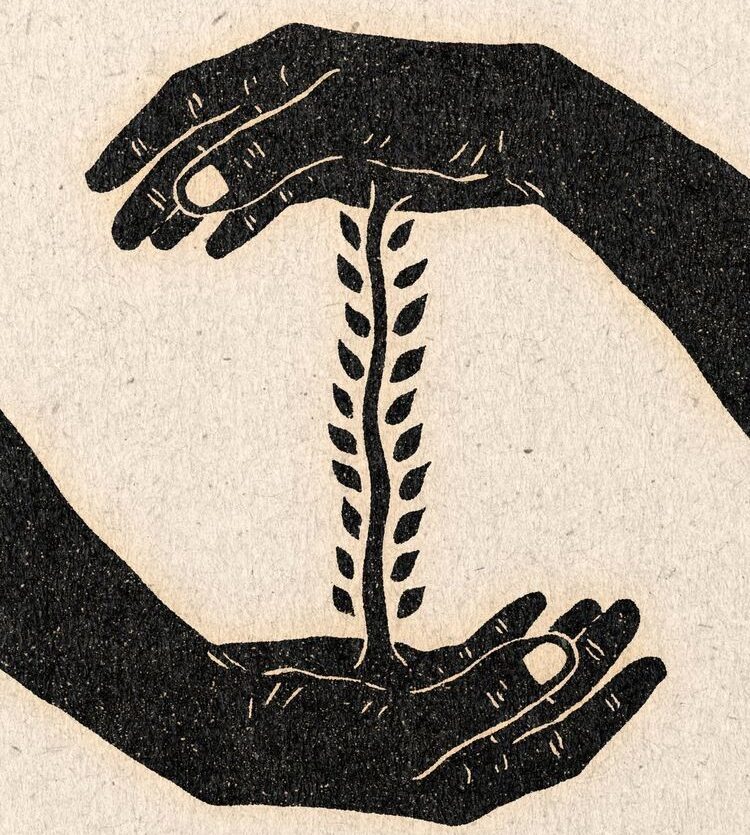

Humanity’s impact on the global environment has become so large and active that it rivals some of Nature’s greatest forces in its impact on the functioning of the Earth system.
Thus, it has been proposed that we have entered a new geological epoch: the Anthropocene. This name—Anthropos, human in Greek—suggests that the age we live in is one we have authored, but not necessarily one we have understood. While our cities glow brighter than stars and our machines burrow deeper than roots, our actions altered oceans, shattered seasons, and kindled fires in forests that once stood for millennia.
Despite not having a consensus in academia as to whether we truly are in a new epoch, the concept of the Anthropocene can be illuminating mirror that we hold up to our civilization.

The imprints humans have made on the planet are various: increased greenhouse gases emissions, degradation of the biosphere, changes in biogeochemical cycles (water, nitrogen, phosphate), artificialization of ecosystems… In case you want to investigate these further, I recommend the Feral Atlas, a wonderful online library and art gallery and museum of the Anthropocene. The overall idea, through, is that we have gone from natural systems with humans disturbing them, to human systems with natural ecosystems embedded within them.
When did the Anthropocene start, though?
This was a point of discussion a lecturer proposed to my class once, and many different answers were given by us. The Anthropocene may have started 10,000 years ago with agriculture, when humans began to domesticate plants and animals, fundamentally changing them. The Industrial Revolution, particularly the creation of the steam engine in 1712, was also proposed as the beginning of the Anthropocene, as it ushered an unprecedented global human impact on the planet. The first atomic bomb in 1945 is another compelling suggestion, as the fallout of nuclear bombs will forever remain on Earth.
━━━━━•°•°•❈•°•°•━━━━━
I would like to argue in favour of a different starting point for the Anthropocene (rooted more in symbolism than in scientific knowledge, I must say): the first images of Earth from space.
In The Human Condition, Hannah Arendt reflects on the philosophical significance of Sputnik. In escaping the Earth to orbit it, humanity enacted not just a technological feat, but a philosophical divorce, a denial of our condition as Earthbound beings. She wrote of a species rebelling against the Mother of all living creatures under the sky, detaching himself from it in order to look on it from above.
The publication of the first images of the Earth made this phenomena global, representing a rebellion against human existence as it has been given, a free gift from nowhere, which he wishes to exchange from something he has made himself.
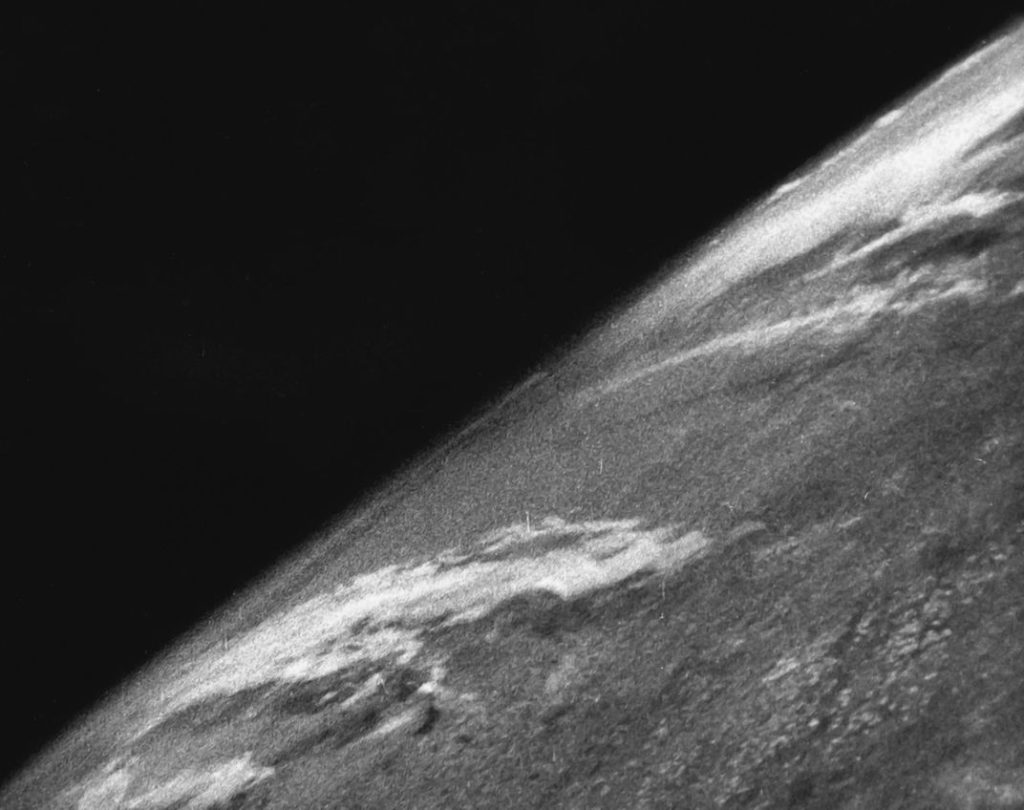

Satellites now form a shimmering shell around the planet, helping us understand the climate crisis and globally mobilize against it. They allow us to see the Earth in its entirety, and in doing so, tempt us to believe we can manage it, dominate it, fix it, as if from the outside. As if the world were not something we are part of.
This is the paradox of the Anthropocene: it tells us we are powerful, but it forgets we are also vulnerable. It warns us that we have become geological agents, but it explains this with a logic that still sees the world as machine, not mystery.

The dominant imaginary of the Anthropocene (framed by technocrats, Earth systems scientists, global summits), rests on a long history of disenchantment, where rationality became instrumental, and the world lost its sacredness. In this view, nature is no longer a relative, a spirit, or a commons, but a problem to be solved by algorithms and satellites.
This version of the Anthropocene also dominates other imaginaries, such as those of indigenous communities, grassroots environmental defenders, and relational cosmologies, which may themselves be the bearers of relevant perspectives and solutions in the face of our present ecological disarray
The Anthropocene need not be a story told only by technocrats peering down from the stratosphere. It can also be told from the roots, the rivers, the wind. From the forest that teaches balance, and the village that remembers care.
The Earth is not a system to be optimized. It is a home to return to. And perhaps the most radical thing we can do in this epoch is to stop looking from above, and start listening from below.
Leave a Reply