For a course I took for my Bachelor, I was challenged to imagine how the Amsterdam Science Park campus may look like in the future. From the exploration of the connections within the web of life, I ambitiously placed my assignment between an utopia and a dystopia. The future in regards to the environmental crisis we are living through can be both bleak and promising to me, depending on my mood. So, because I oscillate so much between the two, my final product depicts what I imagine would be the future of Science Park after humanity is no longer there.
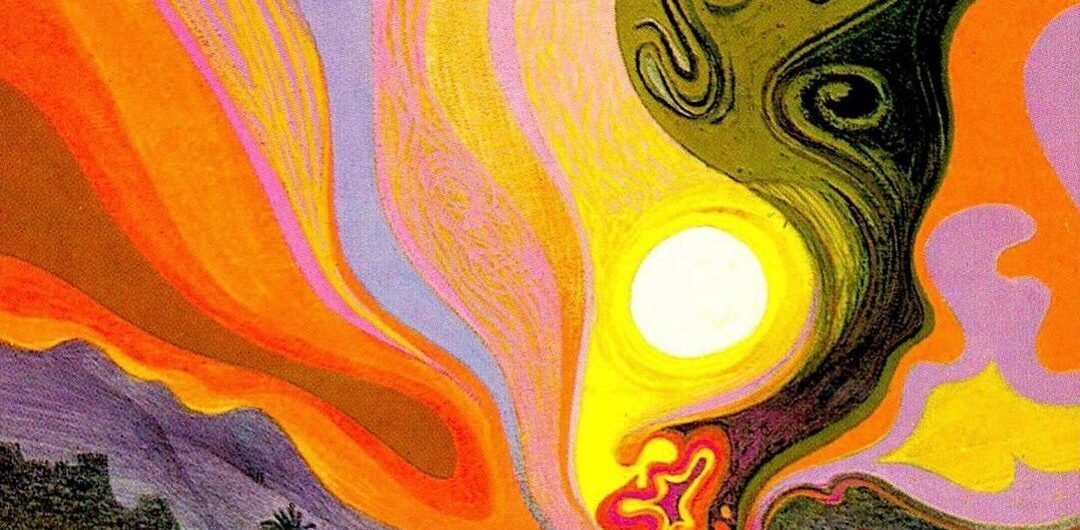
My final product was a combination of painting and collage. Because the assignment required us to choose a specific place of the campus, I chose Anna’s Tuin, which is a permaculture garden with a vegetable garden, food forest, dye garden, bee & butterfly garden and a large section of wilderness. Visiting Anna’s Tuin during my first time at Science park surprised me. I had no idea that such a thing existed in my University, and it inspired me to think about what it could look like in the distant future, how that nature could overtake the campus.
Gathering what I needed for the painting may have taken quite some time, but it also a joy to live through the lens of that painting. From my knowledge of the biodiversity of Science Park, acquired through taking photos of the trees and plants around the campus and being part of a wilderness survival workshop there, I sketched my ideas.The painting was made with gouache in an A2 paper, and the images included come from thrifted picture books of Dutch nature. The painting itself is a sort of collage, as the place I am depicting is not an actual place in Anna’s Tuin, but is actually inspired by one of the photos in the thrifted books I used for the collage. I have to admit, this method was used because my attempts to paint animals failed.
━━━━━•°•°•❈•°•°•━━━━━
━━━━━•°•°•❈•°•°•━━━━━
I titled the painting “Disturbances”, which is inspired by a section from the book “Mushrooms At The End Of The World”, by Anna Lowenhaupt Tsing.
Disturbance is a change in environmental conditions that causes a pronounced change in an ecosystem. Floods and fires are forms of disturbance; humans and other living things can also cause disturbance. Disturbance can renew ecologies as well as destroy them. How terrible a disturbance is depends on many things, including scale. Some disturbances are small: a tree falls in the forest, creating a light gap. Some are huge: a tsunami knocks open a nuclear power plant. Scales of time also matter: short term damage may be followed by exuberant regrowth. Disturbance opens the terrain for transformative encounters, making new landscape assemblages possible.
This definition of disturbance fascinates me. On one hand, the changes in the environment caused by humans during the Anthropocene is destroying ecologies. On the other, nature has this incredible ability of adapting itself to changes. Through natural selection, plants and animals are able to evolve to survive floods and fires. The image this idea evokes, of a strong and resilient web of beings, gives me hope when I feel helpless about the current climate crisis. There have been mass extinctions on this planet before, and yet we are all here. My goal with this painting was to showcase what this idea would look like in a place that was part of my everyday life for three months. Anna’s Tuin will surely find a way to carry on, no matter what we do, no need to worry about that.
Leave a Reply