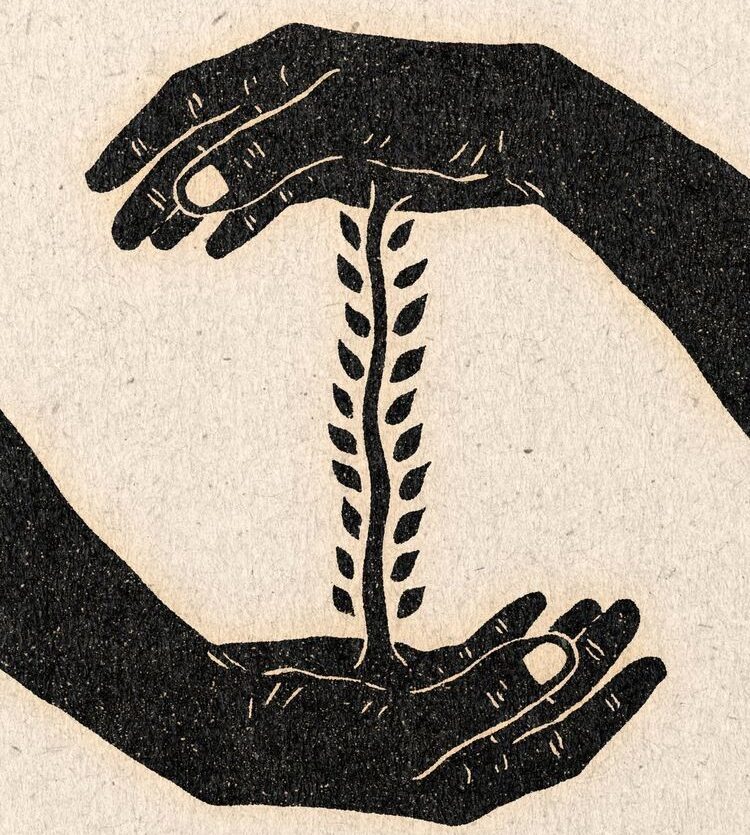
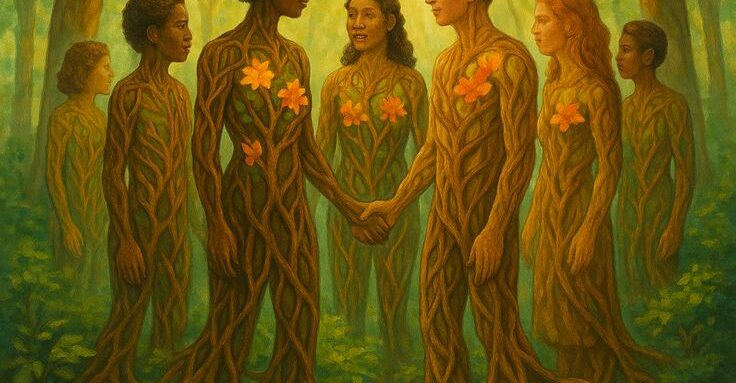
Ubuntu is an ancient African word rooted in humanist African philosophy and can be roughly translated as “humanity to others”, or “I am because we are”. It comes from the Zulu proverb Umuntu ngumuntu ngabantu, meaning “a person is a person through other people”. The word’s origin can also be found on other languages, stretching from Zimbabwe to Rwanda.
My first encounter with it was through reading the chapter “We Live in Paradise: Beautiful Nature in African Tradition”, by Pius Mosima and Nelson Shang. I had the incredible privilege of experiencing a lecture from Mr. Mosima, and I must say he is the most eloquent speaker I have ever heard. With this post I want present part of an essay I wrote about this text

━━━━━•°•°•❈•°•°•━━━━━

One of the most striking concepts in the text is the idea of vital force as central to African cosmology. Unlike Western ontologies that often conceptualize beings as static and separate, African thought envisions all entities, human, animal, mineral, or spiritual, as interconnected manifestations of a dynamic life force. I particularly liked the image the chapter painted of a spider web in which any movement causes vibrations all around it. This radically shifts the framework through which environmental ethics might be approached. Rather than advocating for the protection of nature out of duty, utility, or even compassion, this worldview insists on mutuality and intrinsic connection: harming nature is not just unethical, it is ontologically self-destructive.
Another revelatory idea is the African communitarian ethic, which frames identity and moral duty within the context of a larger, interactive web of beings. I had heard of the Ubuntu phrase “I am because we are” before, but not in a way that encompasses animals, plants, rivers, spirits, and minerals. This creates a much broader community beyond the human and offers a potentially transformative model for addressing environmental degradation. If humans truly understood themselves as interdependent not only with other people but with the entire natural world, the basis for extractive and exploitative behaviours would be significantly undermined.
Furthermore, the emphasis on the sacredness of nature was powerful and deeply thought-provoking. In African traditions, many natural features are imbued with spiritual significance. Certain rivers, trees, and landscapes are seen as dwellings for spirits and are therefore treated with reverence. This contrasts sharply with secularized Western environmental approaches that tend to view nature in instrumental or aesthetic terms. The African view does not amount to nature worship but rather a recognition of nature’s ontological and spiritual status. This section of the chapter reminded me of all of the cases of nature being granted rights in order to ensure its protection. Mountains and rivers in New Zeeland and Latin America have slowly gained legal status, rooted in their sacredness for indigenous communities and the idea that natural entities have legal personhood.
Leave a Reply